In recognition of the distinguished service of Sue Kopp. We dedicate to her this TORAH exhibition on the occasion of her retirement. Her contribution to Warner Pacific College will be long remembered.
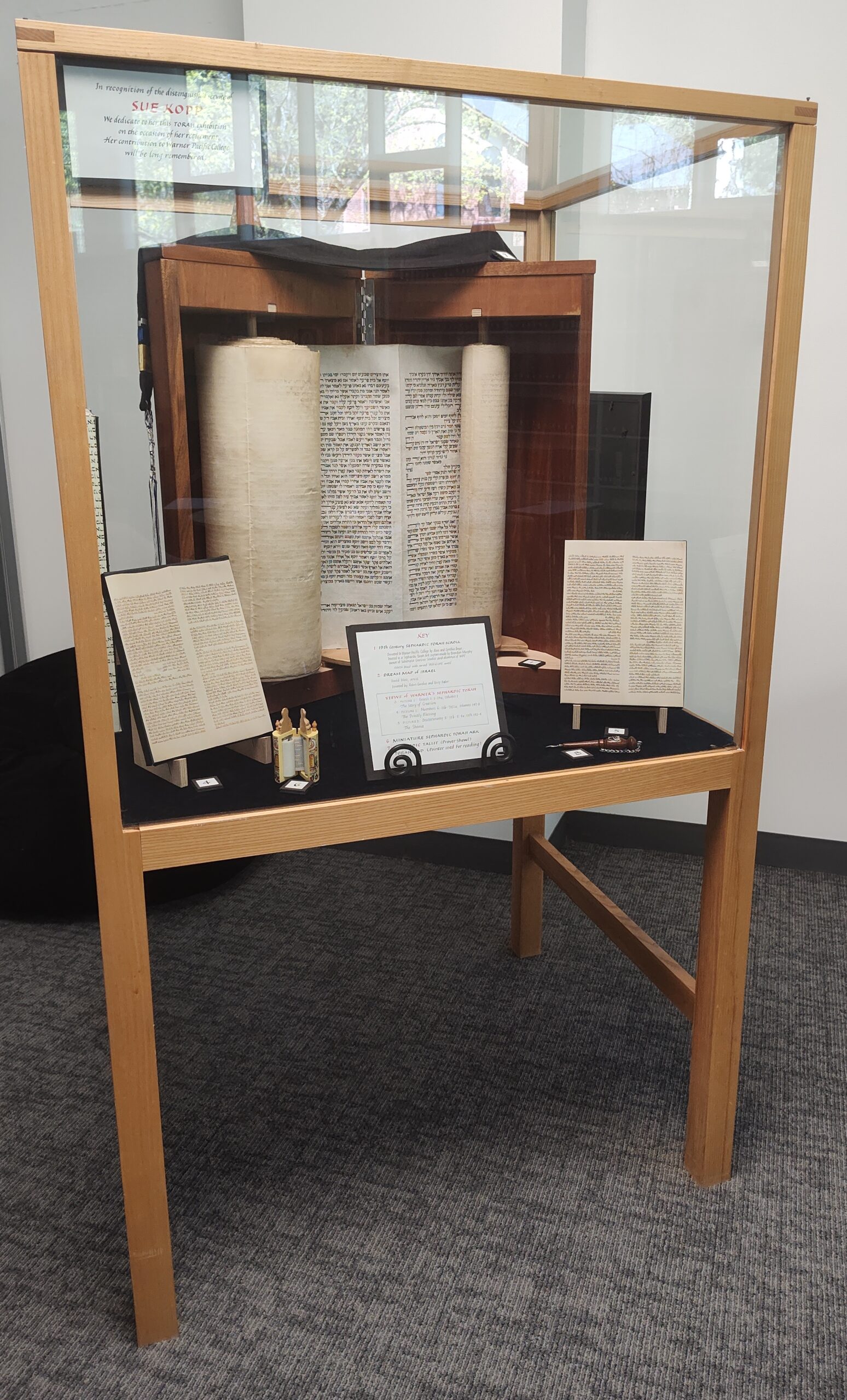
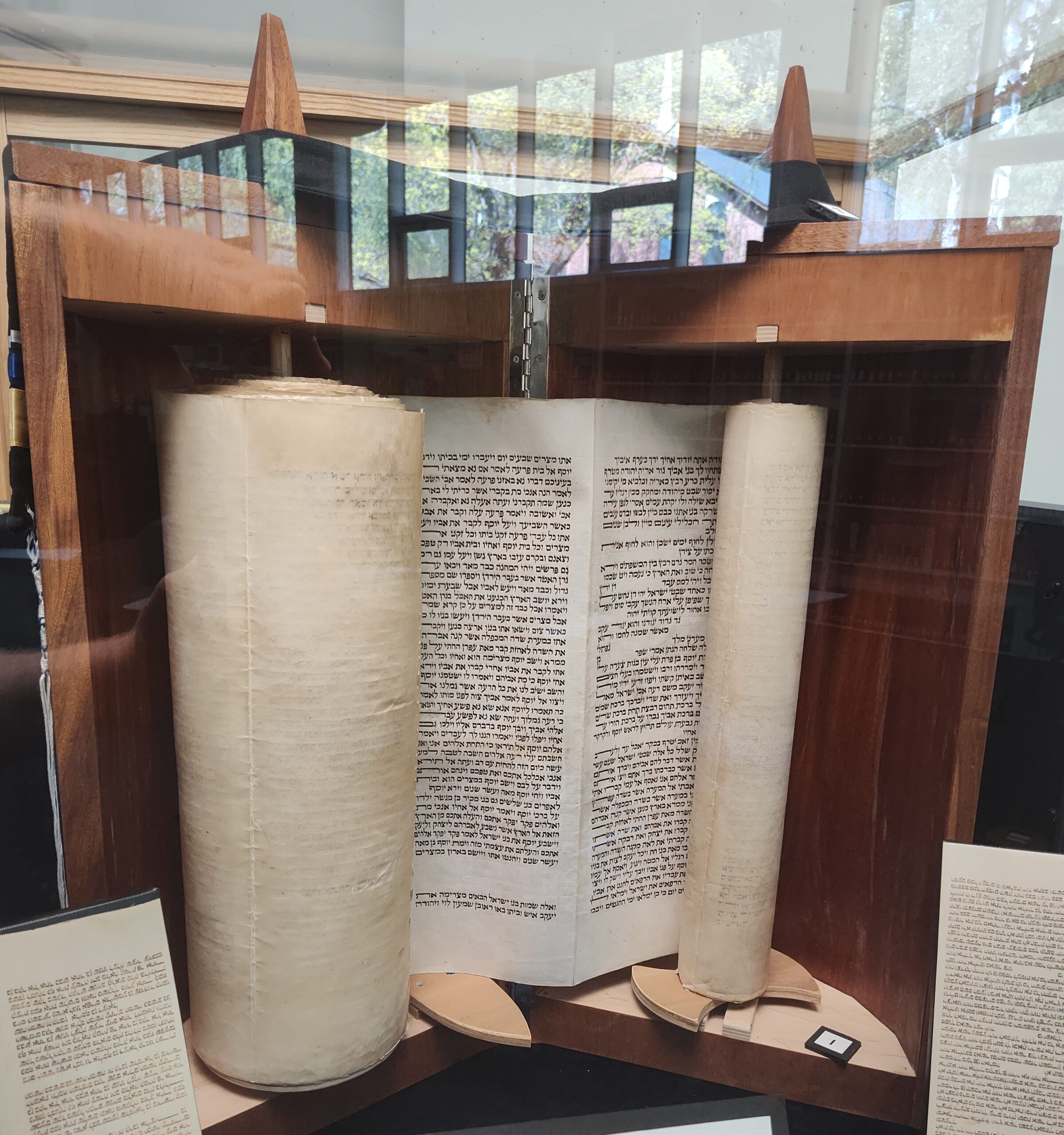
1. 19th Century SEPHARDIC TORAH SCROLL
KHAYA Wood with carved “Tree of Life” motif
Donated to Warner Pacific College by Allan and Cynthia Boyce; housed in a Sephardic Torah Ark, custom made by Brendan Murphy, owner of Substrata Creative Studios and alumnus of WPC
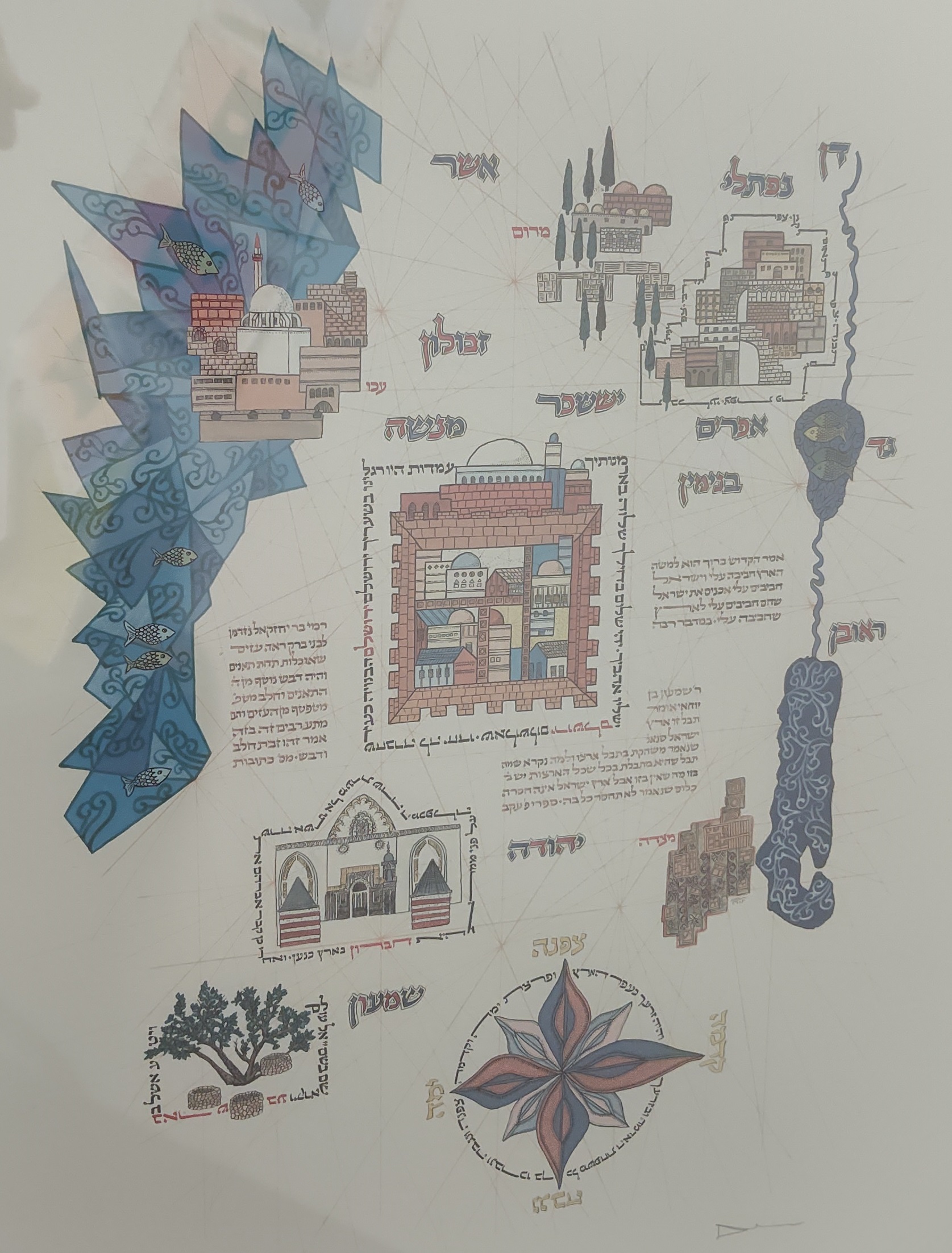
2. DREAM MAP of ISRAEL
David Moss, artist
Donated by Robin Gordon and Terry Baker
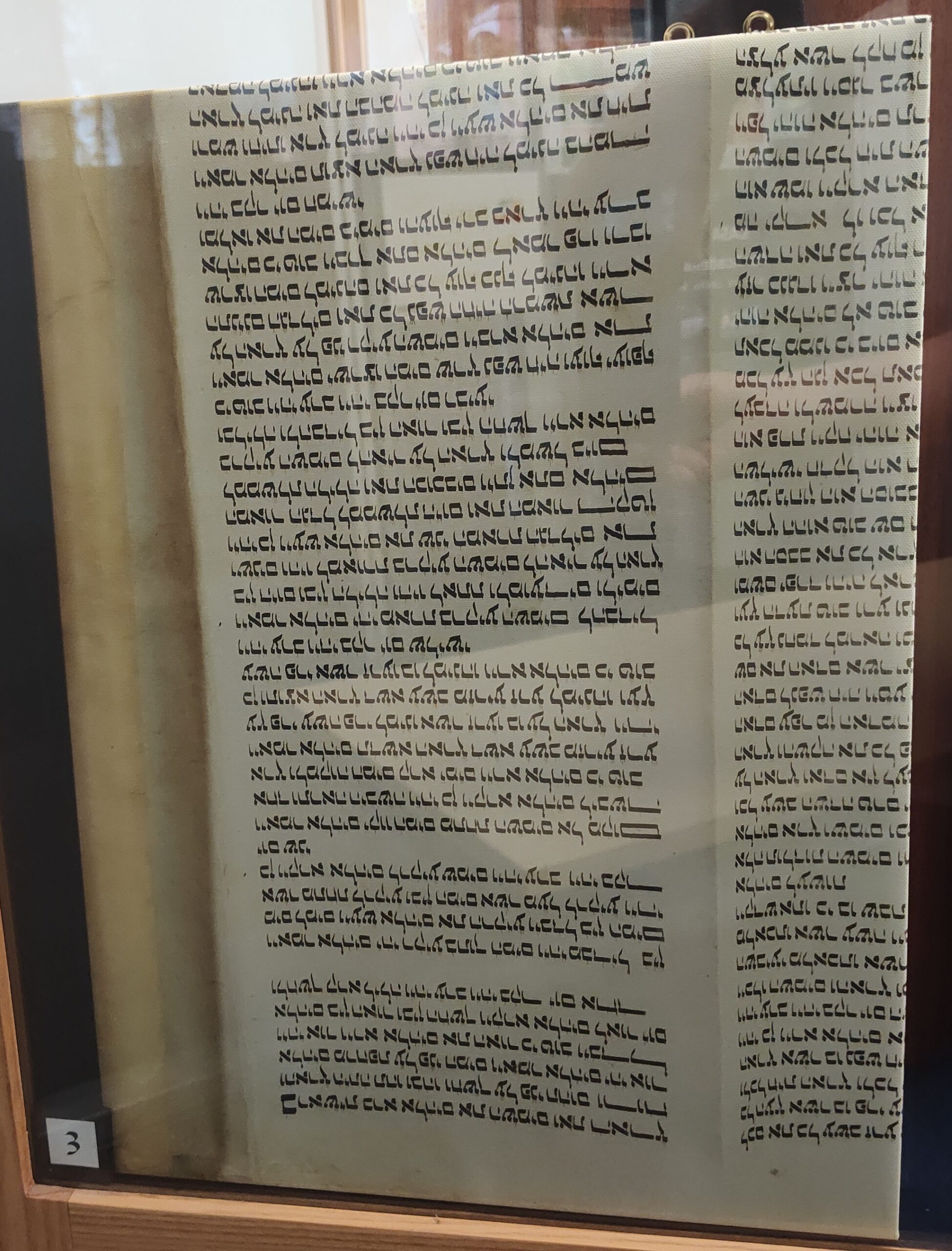
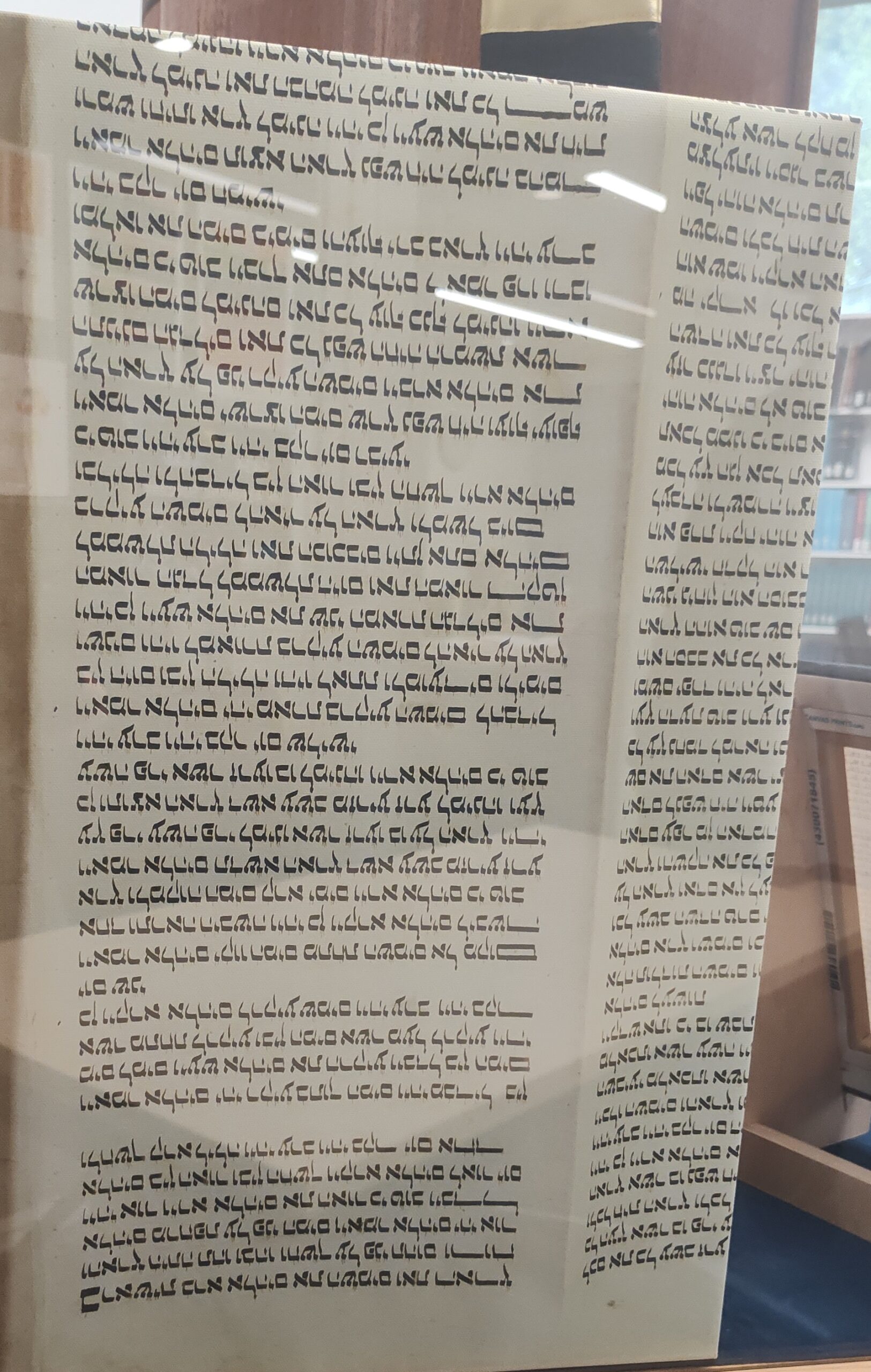
3. View of SEPHARDIC TORAH: The Story of Creation (column 1)
First Verse: Genesis 1:1 (Bereishit 1:1)
Last Verse: Genesis 1:31 (Bereishit 1:31)
Additional Information:
- This is the start of the scroll.
- Hebrew is written and read from right to left. In the image, the right side of the scroll is attached to the wooden rollers (the Atzei Chayim).
- This text is written in Assyrian Script (Ktav Ashurit), the traditional calligraphic script used for sacred scrolls.
- The scribe used a large letter “Bet” (ב) to start the first word, Bereishit. This is traditional in Torah scrolls to mark the very beginning of the Five Books of Moses.
- Tagin are small, decorative crowns or daggers placed above seven Hebrew letters (ש, ע, ט, נ, ז, ג, צ). Many Jewish traditions consider them necessary for a scroll to be considered kosher. Some people think these are the “tittles” referred to by Jesus during his Sermon on the Mount (Matthew 5:18).
- This column is written in standard block prose. Some letters like the He (ה) or Lamed (ל) are used as fillers by stretching them horizontally. This technique is used by scribes to ensure the left margin remains straight or justified. It is a hallmark of professional Torah calligraphy.
4. View of SEPHARDIC TORAH: The Priestly Blessing (columns 147-148)
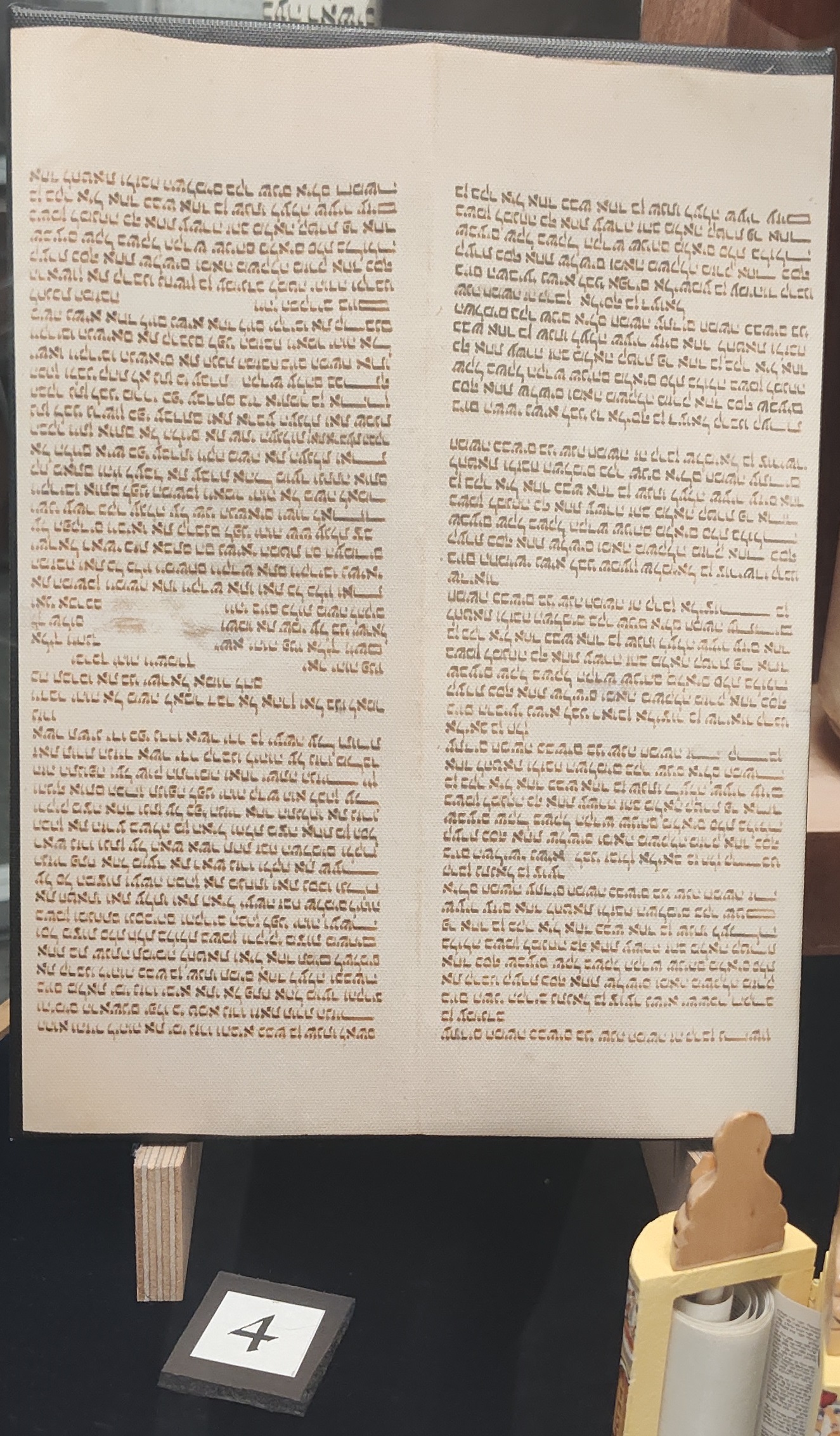
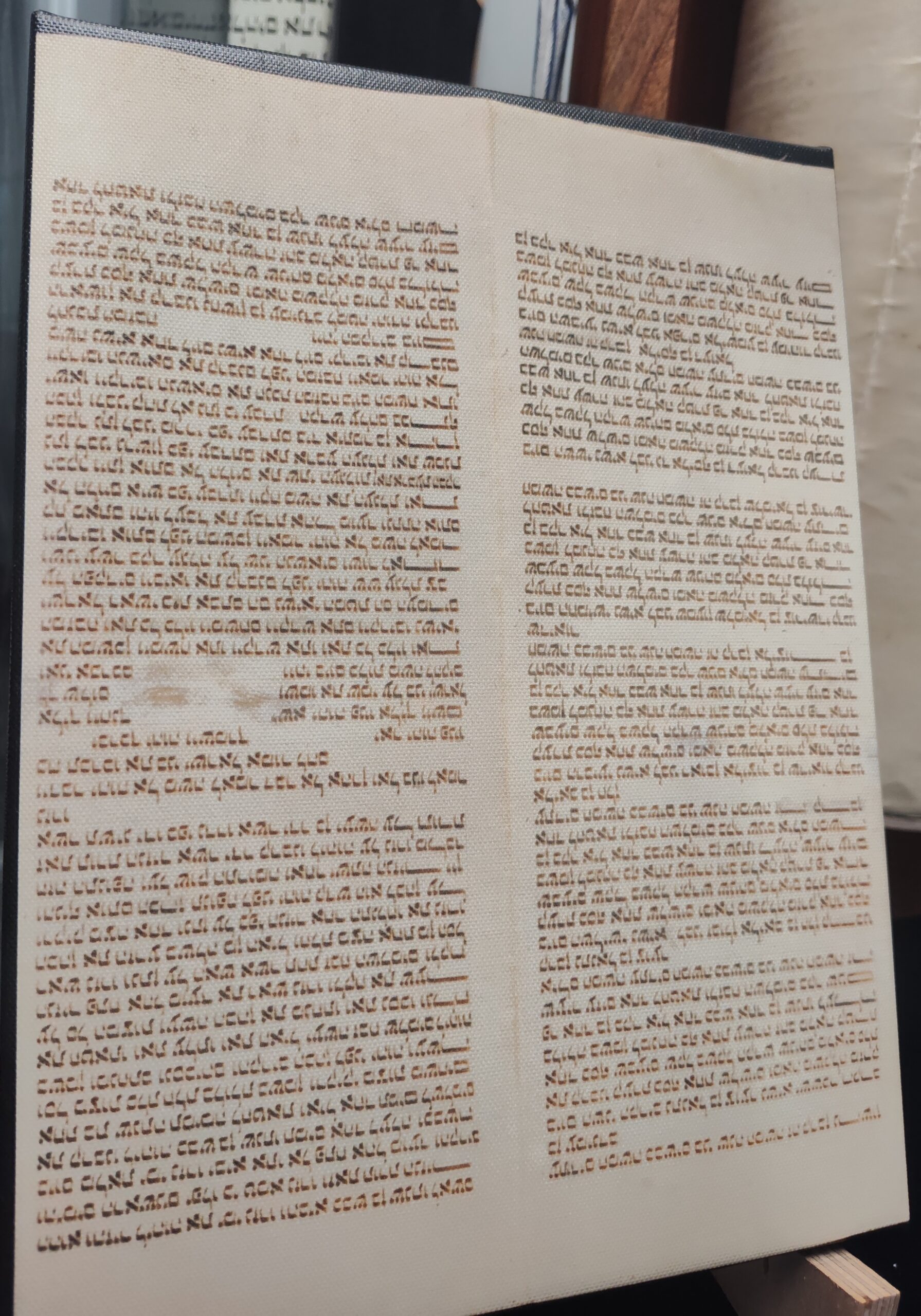
Column 147 (right) First Verse: Numbers 6:13 (Bamidbar 6:13)
Column 147 (right) Last Verse: Numbers 7:11 (Bamidbar 7:11)
Column 148 (left) First Verse: Numbers 7:12 (Bamidbar 7:12)
Column 148 (left) Last Verse: Numbers 7:53 (Bamidbar 7:53)
Additional Information:
- Near the middle of the right column, this section contains the well-known Priestly Blessing (Numbers 6:24-26):
- May the Lord bless you and keep you.
May the Lord make His face shine upon you.
May the Lord lift up His countenance upon you and give you peace.
- May the Lord bless you and keep you.
- Counting down from the top, the blessing starts on line 21. Indented text makes the Priestly Blessing stand out from the surrounding prose. In Hebrew, it reads:
- Line 21 (3 words, 15 letters): יְבָרֶכְךָ יְהוָה וְיִשְׁמְרֶךָ (3
Line 22 (5 words, 20 letters): יָאֵר יְהוָה פָּנָיו אֵלֶיךָ וִיחֻנֶּךָּ (5
Line 23 (7 words, 25 letters): יִשָּׂא יְהוָה פָּנָיו אֵלֶיךָ וְיָשֵׂם לְךָ שָׁלוֹם
- Line 21 (3 words, 15 letters): יְבָרֶכְךָ יְהוָה וְיִשְׁמְרֶךָ (3
- The scribe uses this structure to represent the expansion of God’s blessing.
- A large blank space (a Petuchah) immediately follows these three lines of text. This signifies a major pause before the text transitions to the next topic (the tribal offerings).
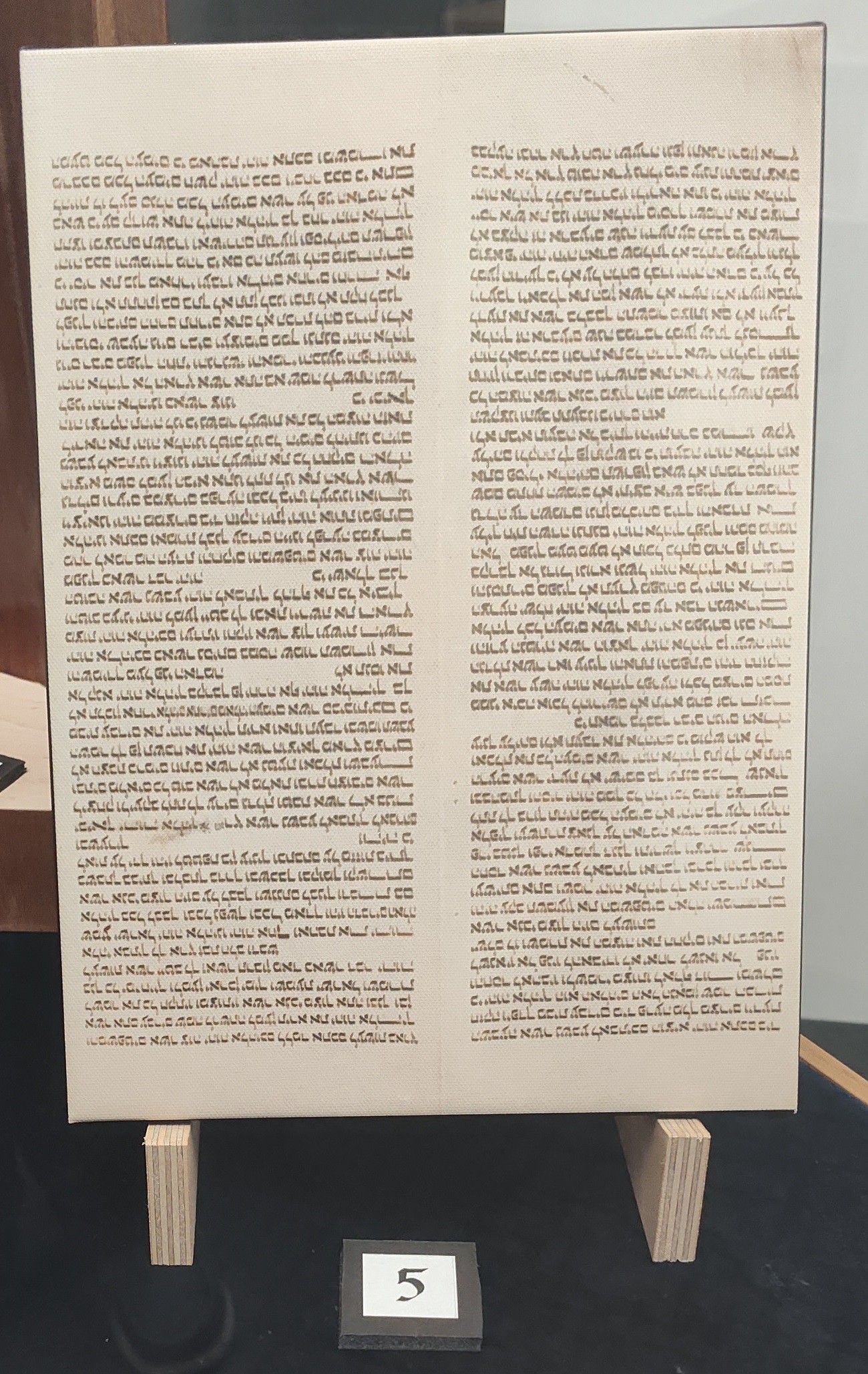
5. View of SEPHARDIC TORAH: The Shema (columns 193-194)
Column 193 (right) First Verse: Deuteronomy 5:22 (Devarim 5:22)
Column 193 (right) Last Verse: Deuteronomy 6:3 (Devarim 6:3)
Column 194 (left) First Verse: Deuteronomy 6:4 (Devarim 6:4)
Column 194 (left) Last Verse: Deuteronomy 7:2 (Devarim 7:2)
Additional Information:
- In the right column, ten lines down from the top, this section of the scroll contains the Shema.
- This column is written in standard block prose. Some letters like the He (ה) or Lamed (ל) are used as fillers by stretching them horizontally. This technique is used by scribes to ensure the left margin remains straight or justified. It is a hallmark of professional Torah calligraphy.
- The line directly above the Shema (line 9) ends early, leaving a large blank space on the left side of the column. This is a Petuchah (open paragraph break) used to signal the beginning of an extremely important declaration: Hear, O Israel: The Lord our God, the Lord is one. (Deuteronomy 6:4)
- The Hebrew text reads: שְׁמַע יִשְׂרָאֵל יְהוָה אֱלֹהֵינוּ יְהוָה אֶחָד
- The first word of this verse, Shema (שְׁמַע), means “hear” or “listen.” The last word of this verse, Echad (אֶחָד), means “one.”
- The Visual Witness: The last letter (Ayin, ע) of the first word, “Shema,” and the last letter (Dalet, ד) of the last word, “Echad,” are intentionally enlarged by the scribe to emphasize them. Together, these two enlarged letters spell the Hebrew word “Ed” (עד), which means “witness” and visually signifies that the reader is a witness to God’s unity when these words are recited.
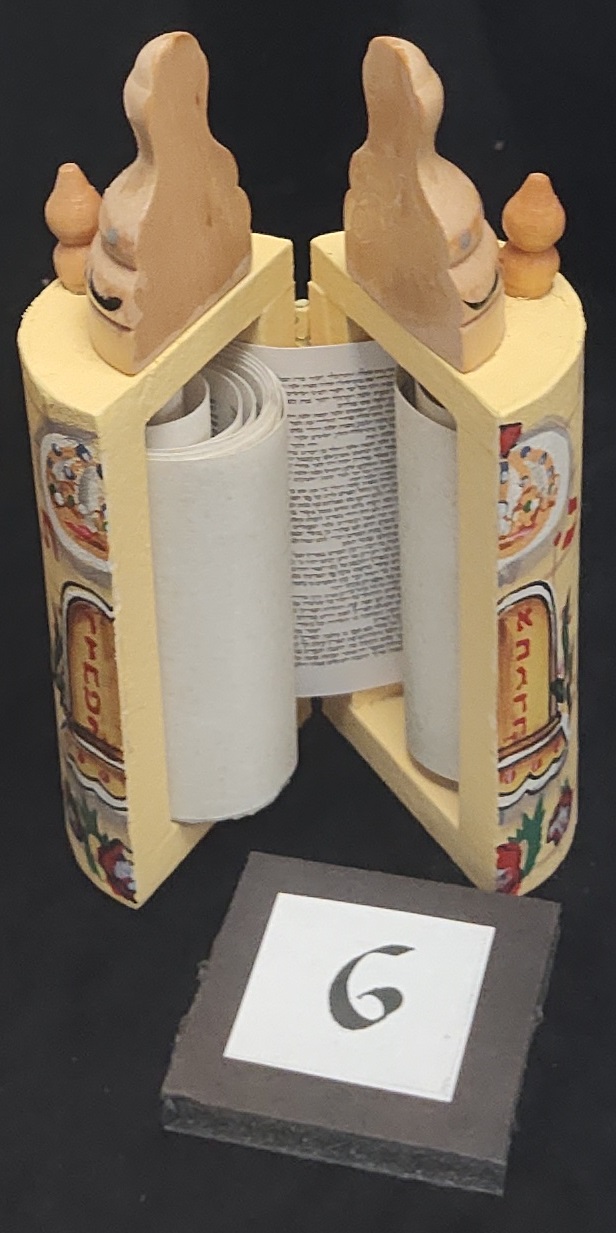
6. MINIATURE SEPHARDIC TORAH ARK
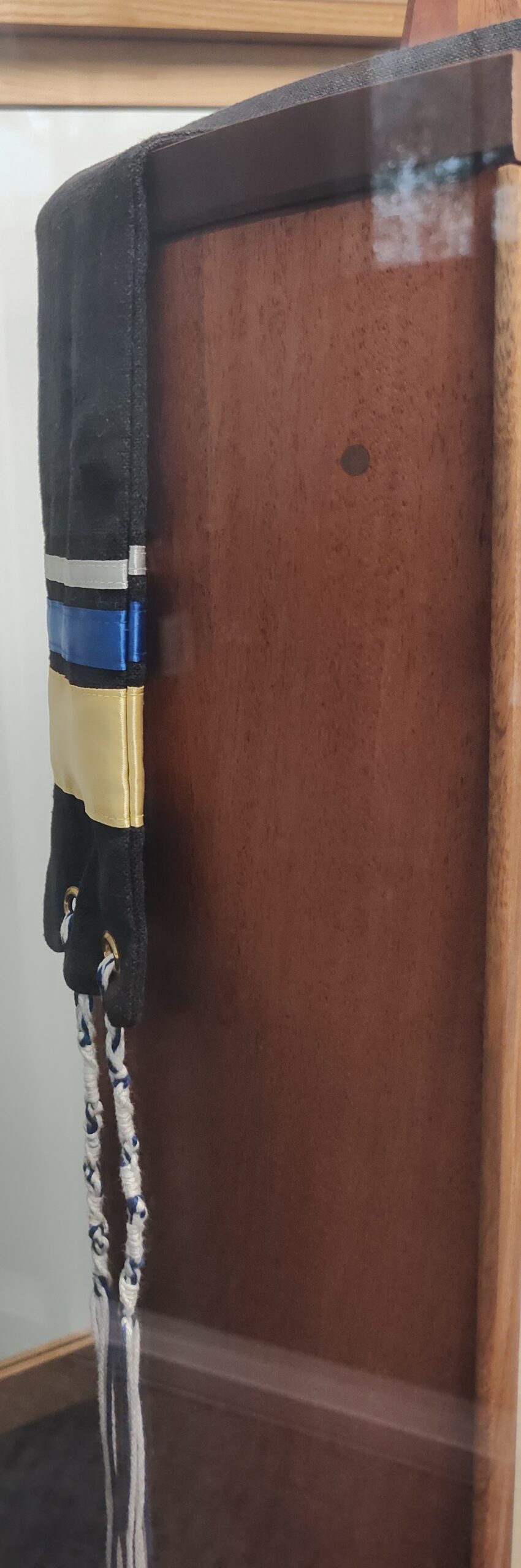
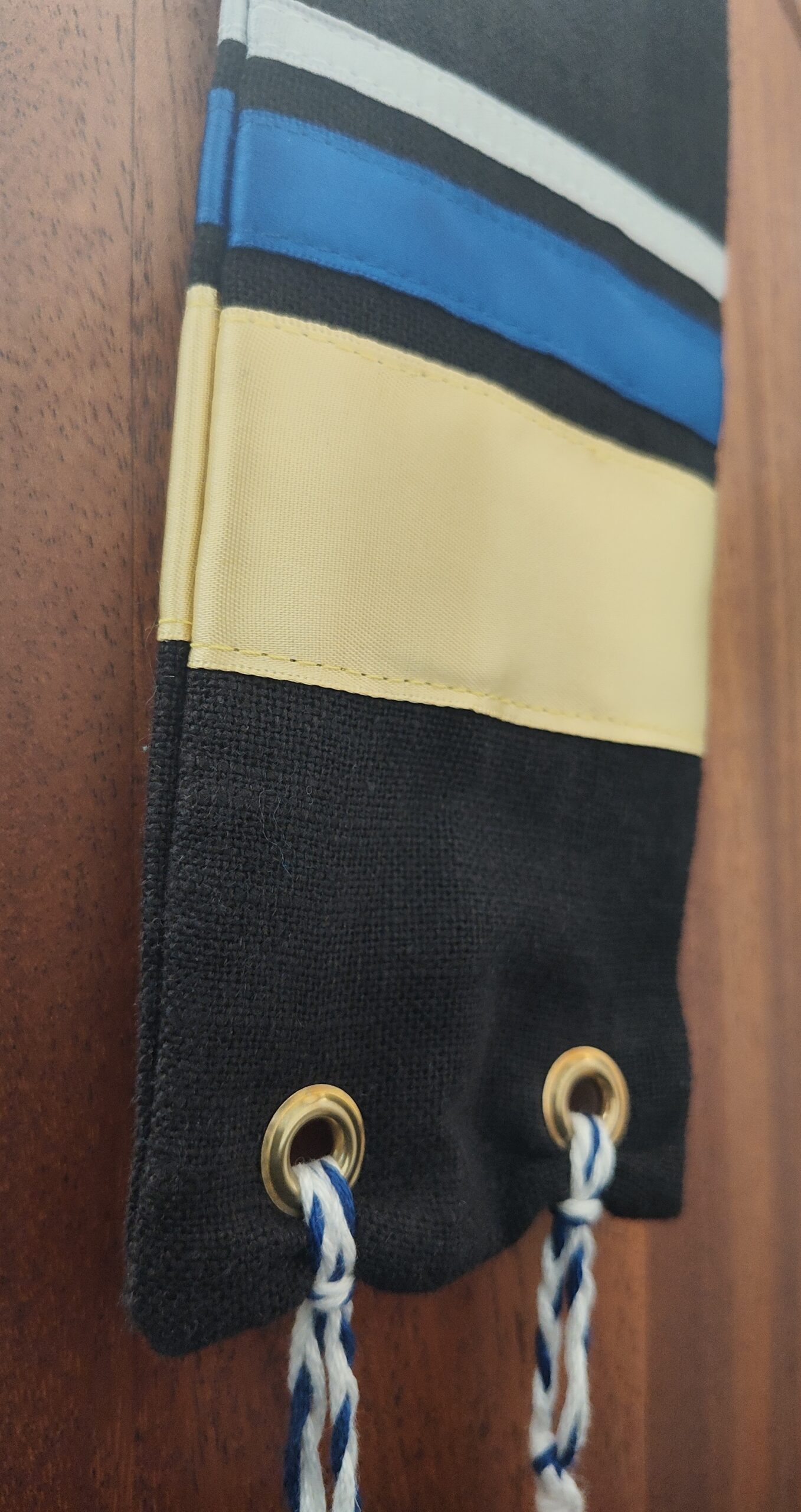
7. SEPHARDIC TALLIT (Prayer Shawl)
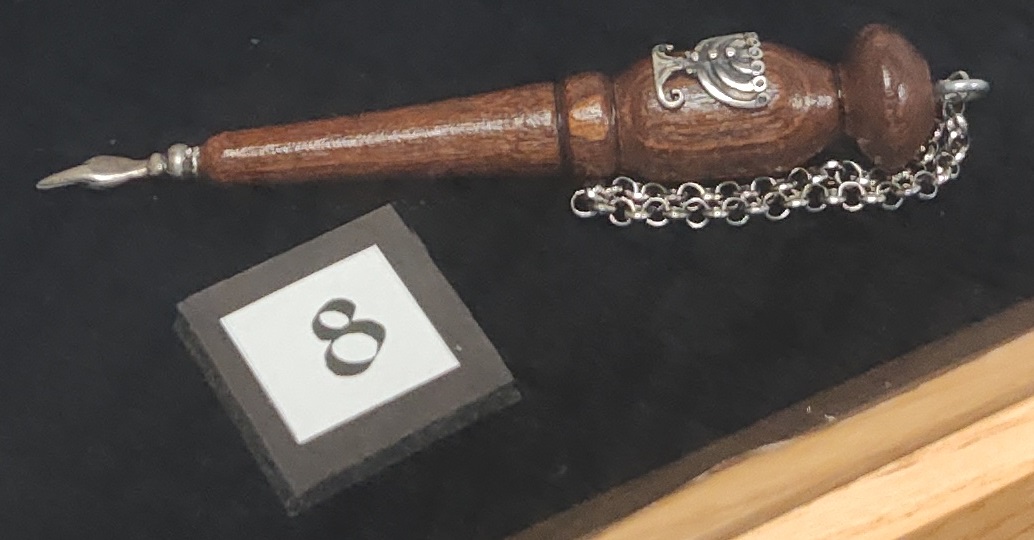
8. TORAH YAD (pointer used for reading)